RDL vs deadlift: differences, muscles and when to use each
The Romanian deadlift starts standing and stops at mid-shin; the conventional deadlift starts on the floor. Here is a table of the differences and how to program each for a client.
We make Trainaq, one of the apps covered here, so weigh our picks with that in mind.

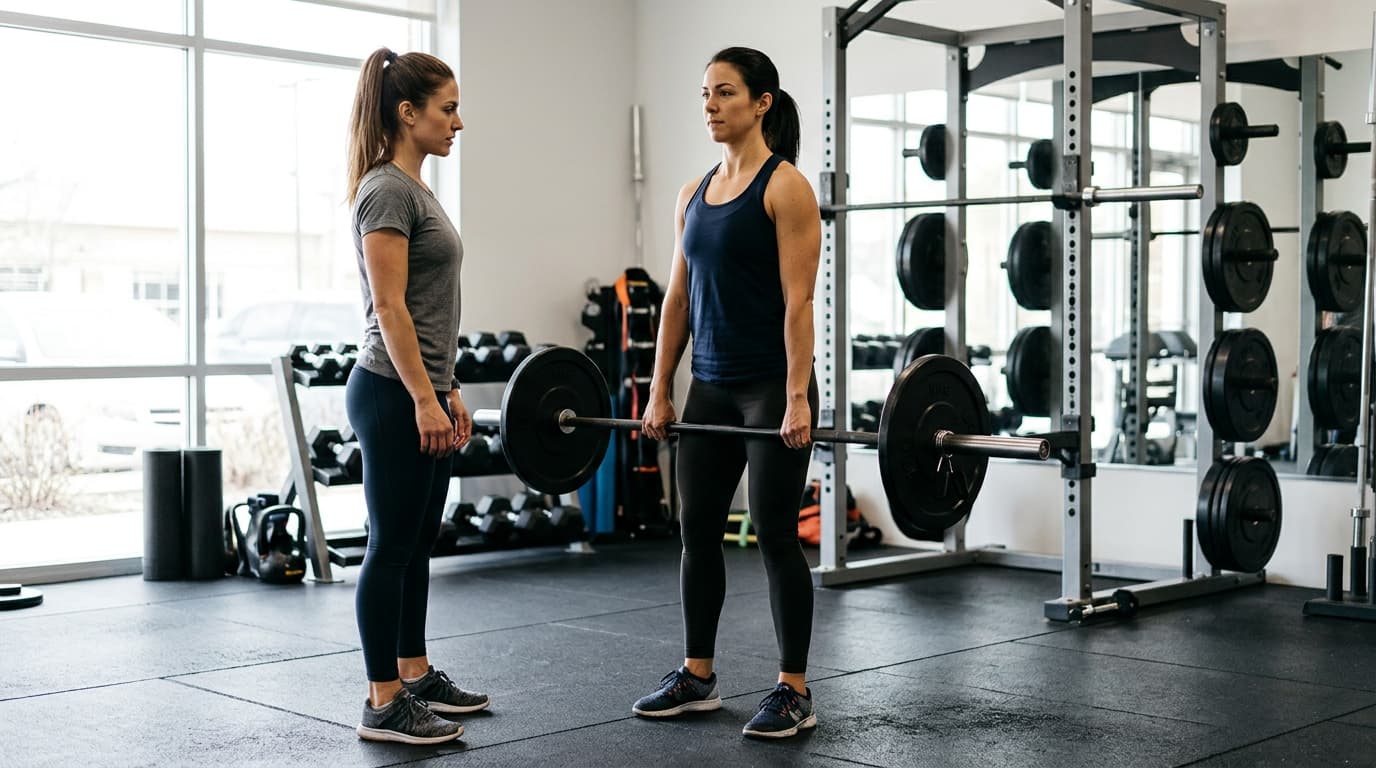
The Romanian deadlift (RDL) and the conventional deadlift are different lifts. The RDL starts standing, pushes the hips back with soft knees and stops at about mid-shin, so it loads the hamstrings and glutes through a stretch. The conventional deadlift starts with the bar on the floor, bends the knees more and ends with a full pull. The deadlift is the better choice for total-body strength; the RDL is the better choice for hamstring and hip-hinge work. Most programs use both.
Below is a side-by-side table, then answers to the questions coaches get most (which is better, why the RDL feels harder, and whether one can replace the other), and a simple way to program each.
RDL vs deadlift: what is the difference?
The RDL and the conventional deadlift differ in where the rep starts, how far the bar travels and how much the knees bend. Use this table to compare them. The RDL figures come from the form-in-numbers table on our barbell Romanian deadlift page; see the conventional deadlift page for the floor pull.
| Feature | Romanian deadlift | Conventional deadlift |
|---|---|---|
| Start position | Standing, bar taken from a rack or lifted up, resting on the thighs | Bar on the floor, over the mid-foot |
| Range of motion | Short: from standing down to knee height or mid-shin, and back | Longer: floor to lockout |
| Knee bend | Soft and almost fixed: about 10 to 15 degrees at the start, 15 to 33 degrees at the bottom | Clearly bent at the start, then extends as the bar leaves the floor |
| Main muscles | Hamstrings and glutes; lower back and forearms also work | Hamstrings and glutes, plus more quads and back because the knees and hips both extend |
| Typical load | Lighter than the same person's deadlift | Usually the heavier of the two |
| Rep style | Slow, controlled lowering, no bounce | Each rep often starts from a dead stop on the floor |
The RDL figures are from the sources listed on the Trainaq RDL page: ACE, NASM, ExRx and a 2018 study by Lee and colleagues in the Journal of Exercise Science and Fitness that compared the conventional and Romanian deadlift.
Is a RDL the same as a deadlift?
No. Both are hip hinges with a barbell, but the RDL is a hinge from the top down, while the conventional deadlift is a pull from the floor. In the RDL the hips travel back, the shins stay near vertical and the bar slides down the thighs. In the conventional deadlift the knees bend more, the bar starts at rest and the legs push the floor away.
For a client, this means the two lifts teach different things. The RDL teaches the hinge pattern and trains the back of the legs under stretch. The deadlift teaches how to produce force from a dead stop.
Are Romanian deadlifts better than regular deadlifts?
Neither is better overall; each is better for a different goal. The RDL is the better pick when the goal is hamstring and glute work, learning the hinge, or training with lighter loads. The conventional deadlift is the better pick when the goal is the heaviest possible pull and whole-body strength.
Use this quick guide:
- Hamstring and glute size or strength: RDL.
- Learning to hinge safely: RDL, or a lighter dumbbell Romanian deadlift.
- Maximum strength and pulling from the floor: conventional deadlift.
- Limited time for one hinge: pick the one that matches the client's goal, then rotate the other in later.
To find the muscles each lift trains, browse the hamstrings exercises and the glutes exercises.
Why is the RDL harder than the deadlift?
The RDL often feels harder because the muscles stay under tension for the whole rep, with no rest on the floor. In the conventional deadlift, each rep can start from a dead stop. In the RDL, the lifter lowers the bar slowly, pauses briefly at the bottom and drives back up, so the hamstrings work through a long stretch with no reset.
Three more reasons clients struggle:
- The tempo is slow. The Trainaq RDL page suggests about 2 seconds down, a brief pause with no bounce, then 1.5 seconds up.
- The bar must stay close. It should brush the legs the whole way.
- The back must stay flat. Clients who round their back to reach lower lose the movement.
The RDL usually uses lighter weights than the deadlift, but it can still feel harder on the hamstrings. A client who deadlifts a certain weight will normally use less on the RDL. To set a sensible starting load, use the one-rep max calculator on a rep range the client can control, then drop the weight for the RDL.
Can I replace a Romanian deadlift with a regular deadlift?
You can swap one for the other in a pinch, but the swap changes the training effect. Replacing an RDL with a conventional deadlift gives more total-body work and less hamstring stretch. Replacing a deadlift with an RDL gives more hamstring work and less leg-drive and floor-pull practice.
Before swapping, check three things:
- The goal. If the aim was hamstring volume, a floor deadlift is a weaker substitute.
- The client's fatigue. Heavy floor pulls are more tiring, so they can crowd out later work.
- Technique. A client who cannot hold a flat back in the RDL is not ready for heavy floor pulls either.
If you want a middle option, the barbell stiff-leg deadlift keeps the knees even straighter.
Which is harder, RDL or SLDL?
The stiff-leg deadlift (SLDL) is usually harder to do well because the knees are straighter, so the hamstrings stretch more and the back has less room for error. The RDL keeps a small knee bend and lets the hips go back. Beginners should learn the RDL first, then move to the SLDL only if they can keep a flat back and good control at the bottom.
If a client wants an easier or more balanced variation, the single-leg Romanian deadlift uses lighter weights and challenges balance.
When should you program each lift for a client?
Program the conventional deadlift as the main strength lift and the RDL as a main or secondary hamstring lift. Pick based on the client's goal, experience and recovery.
A simple coaching checklist
- Teach the hinge first. Start with the dumbbell RDL or a light barbell RDL.
- Check the setup. Feet hip-width, soft knees, bar on the thighs, flat back.
- Set the stop point. Stop at a strong hamstring stretch, around mid-shin, before the back rounds.
- Pick the main lift by goal. Strength: deadlift. Hamstrings and glutes: RDL.
- Do not stack both heavy on the same day unless the client recovers well.
- Track the load and reps each week and progress slowly.
Example: two clients, illustrative only
These made-up weekly layouts show the idea. They are not a prescription.
| Client goal | Day A | Day B |
|---|---|---|
| General strength | Conventional deadlift, 3 sets of 5 | RDL, 2 sets of 10 |
| Hamstring and glute focus | RDL, 4 sets of 8 | Conventional deadlift, 2 sets of 5, lighter |
A client with back pain or an injury should see a doctor or physical therapist before doing either lift. This post is general education for coaches, not medical advice.
How Trainaq helps
Trainaq has its own 3D exercise videos for both lifts, with male and female versions, in the workout builder and in the client app, and you can add your own custom exercises beside them. You can build the RDL and deadlift sessions in the workout builder, assign them to one client or many and see progress as clients log it. See the barbell Romanian deadlift page for steps and cues, then start the free trial on the pricing page.
FAQs
Is a RDL the same as a deadlift?
No. The Romanian deadlift starts standing and stops around mid-shin with soft knees. The conventional deadlift starts with the bar on the floor and uses more knee bend and a full pull.
Why is a RDL harder than a deadlift?
The RDL keeps the hamstrings under tension through the whole rep with no rest on the floor. The slow lowering and the long stretch make lighter weights feel demanding.
Can I replace a Romanian deadlift with a regular deadlift?
You can, but the effect changes. The deadlift gives more whole-body work, while the RDL gives more hamstring stretch, so match the swap to the client's goal.
Which is harder, RDL or SLDL?
The stiff-leg deadlift is usually harder to do well because the knees are straighter and the hamstrings stretch more. Teach the RDL first.