How to become a yoga instructor in India: YCB, RYT-200 and what to expect
The two main routes to teaching yoga: the Ministry of AYUSH's Yoga Certification Board in India, and a 200-hour course with Yoga Alliance RYT-200 registration abroad. Plus how to check a certificate.

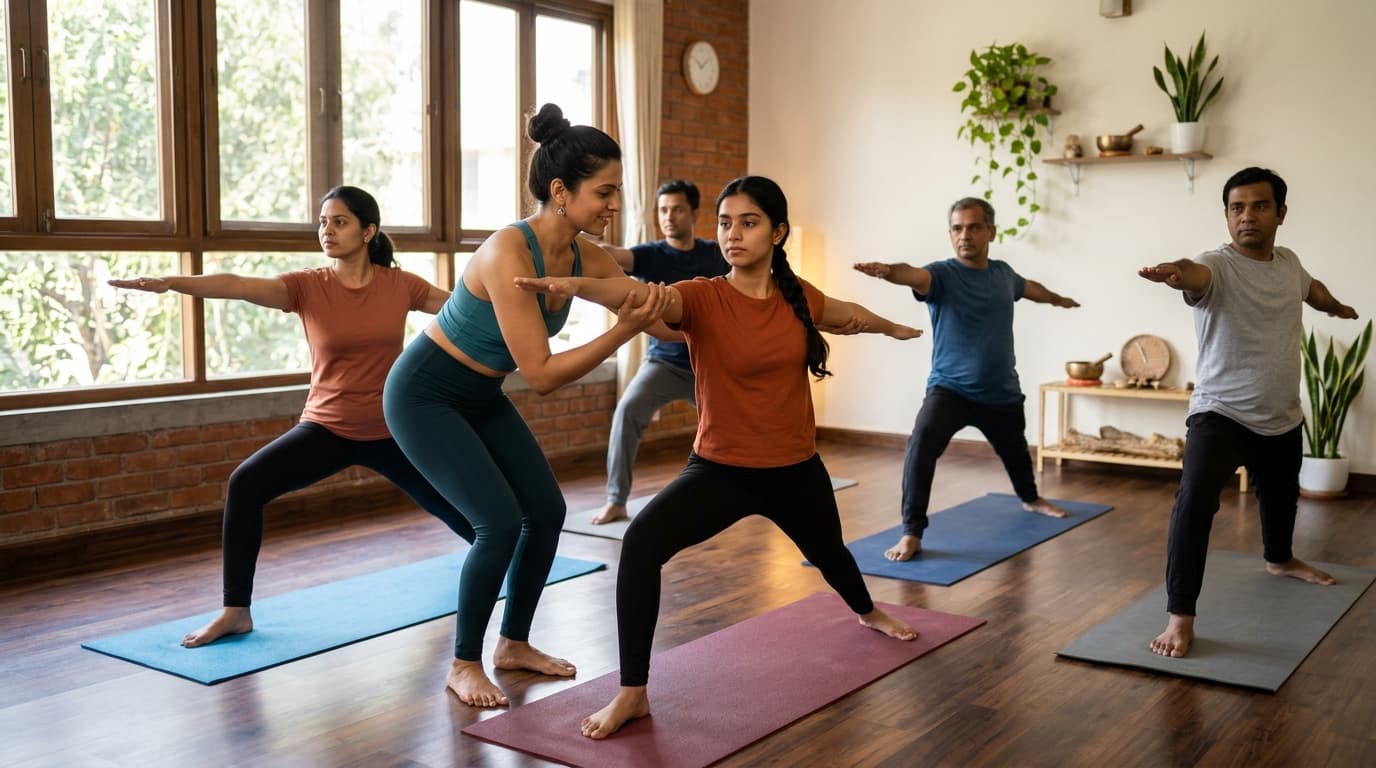
To become a yoga instructor in India, train with a recognised course and get certified through the Yoga Certification Board (YCB) under the Ministry of AYUSH. YCB is the official national route. For work abroad, complete a 200-hour course at a Yoga Alliance Registered Yoga School and register as an RYT-200. Then build a small base of students and a simple way to take bookings and fees.
This guide covers both routes, how to verify a certificate, how teachers earn (and how to work out your own number), and how to find your first students. Fees, exam dates and eligibility rules change, so this post sends you to the official sites for them instead of quoting figures that may be out of date.
What qualifications do I need to teach yoga?
In India no single law says you must hold a certificate to teach a class. In practice, studios, schools, corporates and government programmes ask for a recognised one. Your realistic choices are:
- YCB certification: the national scheme of the Ministry of AYUSH. Titles on it include 'Yoga Teacher and Evaluator (YCB Level 3)'.
- A teacher training course (TTC) at a yoga school or institute: useful for learning to teach, whether or not it leads to a board certificate.
- Yoga Alliance RYT-200: the credential most international studios recognise.
A certificate shows you were trained. Students come back because you teach safely and clearly, so keep practising and keep learning anatomy, sequencing and how to modify poses.
What is the Yoga Certification Board (YCB) route in India?
The Yoga Certification Board is the Ministry of AYUSH's body for certifying yoga professionals in India. It certifies people at several levels, each with its own title, such as 'Yoga Teacher and Evaluator (YCB Level 3)'. Training institutes can be affiliated to it, and candidates take an assessment.
Every one of these details can change, so confirm them there before you pay anyone.
Steps to take for YCB certification
- Open the YCB site and read the level descriptions. Note the title, minimum age and education or experience requirement for each.
- Pick the level that matches where you are today. Do not skip to a higher level because the title sounds better.
- Find a training provider or institute listed or affiliated with the board for that level. Ask them for their affiliation proof.
- Complete the training and register for the assessment on the official process.
- Keep the certificate and any registration number. You will need them for studio applications and for verification.
Is the Ministry of AYUSH certificate the most recognised yoga certification?
In India, YCB certification is the government-backed scheme, and that is why many institutions look for it. Outside India, Yoga Alliance registration is the credential studios ask for most often. So the most recognised certificate depends on where you plan to teach. Teachers who want both options often do a YCB level and a 200-hour Yoga Alliance course.
How do I become an RYT-200 with Yoga Alliance?
An RYT-200 is a Registered Yoga Teacher who completed a 200-hour training at a Registered Yoga School (RYS) and then registered with Yoga Alliance. The school must be registered with Yoga Alliance for your hours to count. The requirements and fees are on Yoga Alliance's website.
- Check the school's name on Yoga Alliance's directory of registered schools.
- Confirm that the programme is a 200-hour one, and ask what the hours cover (technique, teaching methodology, anatomy, philosophy, practicum).
- Complete the course and collect your certificate of completion.
- Create your Yoga Alliance profile and submit your training for registration.
- Renew as the organisation requires. Read its current rules before you commit.
Many Indian cities, including Rishikesh, Mysuru, Pune and Bengaluru, have schools that run these courses. Registration is what matters, not the city.
How long does it take to be a yoga instructor?
A 200-hour course is a total of 200 training hours. How long that takes depends on the format: a residential course packs the hours into a few weeks, while weekend or online formats spread them over months. YCB levels have their own training and assessment steps, so check the board's site for each level's duration.
Plan for time beyond the certificate too. Most new teachers practise by teaching friends, family and a few free community classes before taking paid students.
How much does it cost to become a yoga instructor in India?
The cost is the course fee plus the certification or registration fee, plus travel and stay if the course is residential. Fees differ by provider and change over time, so this post does not quote one. Work it out like this:
| Cost line | Where to find it |
|---|---|
| Board assessment or certification fee | The YCB site |
| Training course fee | The provider's written fee sheet |
| Yoga Alliance registration | Yoga Alliance's site |
| Travel and stay | Your own quote or estimate |
| Mat, props, music, a small speaker | Your own list |
Ask every provider for the full fee in writing, and ask what is not included (exam fee, books, accommodation, GST).
How do I check a yoga certificate?
Check the issuer, not the paper. A certificate is only as good as the body that stands behind it.
- If the site does not offer a lookup for your case, ask the board directly.
- For a Yoga Alliance credential: look the teacher or school up in the organisation's public directory on yogaalliance.org.
- For any other certificate: ask which body recognises it and confirm that body exists and lists the school.
- Red flags: a promise of certification without attending, no named teachers, no written syllabus, or pressure to pay quickly.
Can you make good money being a yoga instructor?
Yes, some teachers do, but income varies widely by city, format and how many students you keep. This post gives no earnings figure because the brief had no named, dated source to cite. Work out your own number instead. Your income depends on four things:
- How many classes you teach a week.
- How many students attend each class.
- What each student pays, per class or as a monthly membership.
- How many students renew each month.
Example: a monthly income worked out (illustrative)
These numbers are made up to show the arithmetic. Replace them with your own.
| Item | Illustrative value |
|---|---|
| Students on a monthly membership | 30 |
| Fee per student per month | ₹1,500 |
| Monthly membership income | ₹45,000 |
| Private sessions a month | 8 |
| Fee per private session | ₹900 |
| Private session income | ₹8,000 |
| Total before costs | ₹53,000 |
Subtract hall rent, travel, props and platform costs to see what you keep. Try the coach income calculator with your own figures.
One tax point: gym, fitness, health club and yoga services attract 5% GST without input tax credit from 22 September 2025 (earlier 18%), according to the CBIC and the GST Council. Registration is required above ₹20 lakh aggregate turnover (₹10 lakh in special category States). Confirm how this applies to you with a chartered accountant.
How do yoga instructors find students?
Start with people who already know you, then widen the circle.
- A free trial class in a park, society clubhouse or community hall.
- Housing societies, offices and schools: ask the resident welfare association or HR for a regular slot.
- Studios: apply to teach a few slots once you hold a recognised certificate.
- Online classes: a fixed weekly timetable with one link works better than ad hoc sessions.
- Word of mouth: ask every happy student to bring one friend.
Keep your offer simple: one clear class (for example, a gentle morning flow), a fixed time and a monthly fee. A teacher who can explain a pose well, such as Sun Salutation A, and spot a student's common mistake gets repeat students.
You may meet students with injuries, pain, pregnancy or a medical condition. Ask them to speak to their doctor before they join, and never promise a cure. Collect health information at sign-up so you know what to adapt.
FAQs
What qualifications do I need to teach yoga in India?
No single rule stops you from teaching, but studios and institutions usually ask for a recognised certificate. The national scheme is the Yoga Certification Board under the Ministry of AYUSH, and many teachers add a 200-hour Yoga Alliance course for work abroad.
What is the most recognised yoga certification?
In India it is YCB certification, which is the Ministry of AYUSH scheme. Internationally it is Yoga Alliance registration, such as RYT-200. Pick the one that matches where you plan to teach.
How do I check a yoga certificate?
Ask for the certificate number and the name of the issuing body, then verify with that body directly. Use yogacertificationboard.nic.in for YCB and the Yoga Alliance directory for registered teachers and schools.
Can you make good money being a yoga instructor?
It depends on your city, your class sizes, your fees and how many students renew. Multiply students by fee, add private sessions, then subtract your costs to see your own monthly number.
How Trainaq helps
Trainaq is built for yoga teachers in India: weekly group classes with waitlists, 1:1 session booking, memberships with class counts, and UPI payments with GST invoices. Your students use the free Trainaq app to book and follow your practice. See the plans on the pricing page and start your free trial.
Sources
- Yoga Alliance's website (yogaalliance.org)